
 Beautiful Japanese Garden 2011, This photo i give you for your PC or Tablet wallpapers or your photo colection.
Download
Beautiful Japanese Garden 2011, This photo i give you for your PC or Tablet wallpapers or your photo colection.

 Japanese garden wallpapers new, we have latest update photo for wallpapers, best for your laptop desktop, tablet wallpapers or ipad wallpaper. Click image and download free
 Japan Flowers Japan Flowers Japan Flowers Japan Flowers Japan Flowers Japan Flowers Japan Flowers Japan Flowers
 Tokyo Mega City Wallpapers Tokyo Mega City Wallpapers Tokyo Mega City Wallpapers Tokyo Mega City Wallpapers Tokyo Mega City Wallpapers Tokyo Mega City Wallpapers
 Tokyo Wallpapers Lanscape Tokyo Wallpapers Lanscape Tokyo Wallpapers Lanscape

 About Nagasaki City Nagasaki Prefecture lies in the northwestern part of Kyushu, the third-largest island of Japan and most southwesterly of its four main islands, and consists of five peninsulas and numerous islands. With the sea in between, it stands face-to-face with a continent, part of which is China, and the Korean Peninsula. It has therefore long been an important transportation point facing the continent of Asia. Ports for trade with Portugal and Holland were also established there in the 16th century. In addition, since it was once the center of Christian propagation, there are many exotic historical ruins and buildings that still remain within the prefecture.
 Japan wallpapers nature Japan wallpapers nature Japan wallpapers nature Japan wallpapers nature
 Japan wallpapers green and nature Japan wallpapers green and nature Japan wallpapers green and nature Japan wallpapers green and nature
 Hiroshima City, facing the Seto Inland Sea, is one of the most prominent cities in the Chugoku region, and a center of the administration and economy of Hiroshima Prefecture. Six rivers flow through the city, so it is often called the "City of Water." It was devastated by an atomic bomb in World War II. All of the buildings in the surrounding area were destroyed. Hiroshima, where the Hiroshima Atomic Bomb Dome (Genbaku Dome) miraculously remained standing, is internationally known as the "City of Peace."
 Akita City and wallpapers. Akita City is situated in the mid-west of Akita Prefecture with the Dewa Mountains in the east and the Japan Sea in the west. You can see the beautiful evening sun setting into the Japan Sea. The city prospered as the capital of the Satake fief in around the 17th century, and is now a pivotal city, with amusement quarters ranking first in the prefecture.
 Japan Landscape Japan Landscape Japan Landscape Japan Landscape Japan Landscape Japan Landscape Japan Landscape. Beutiful color
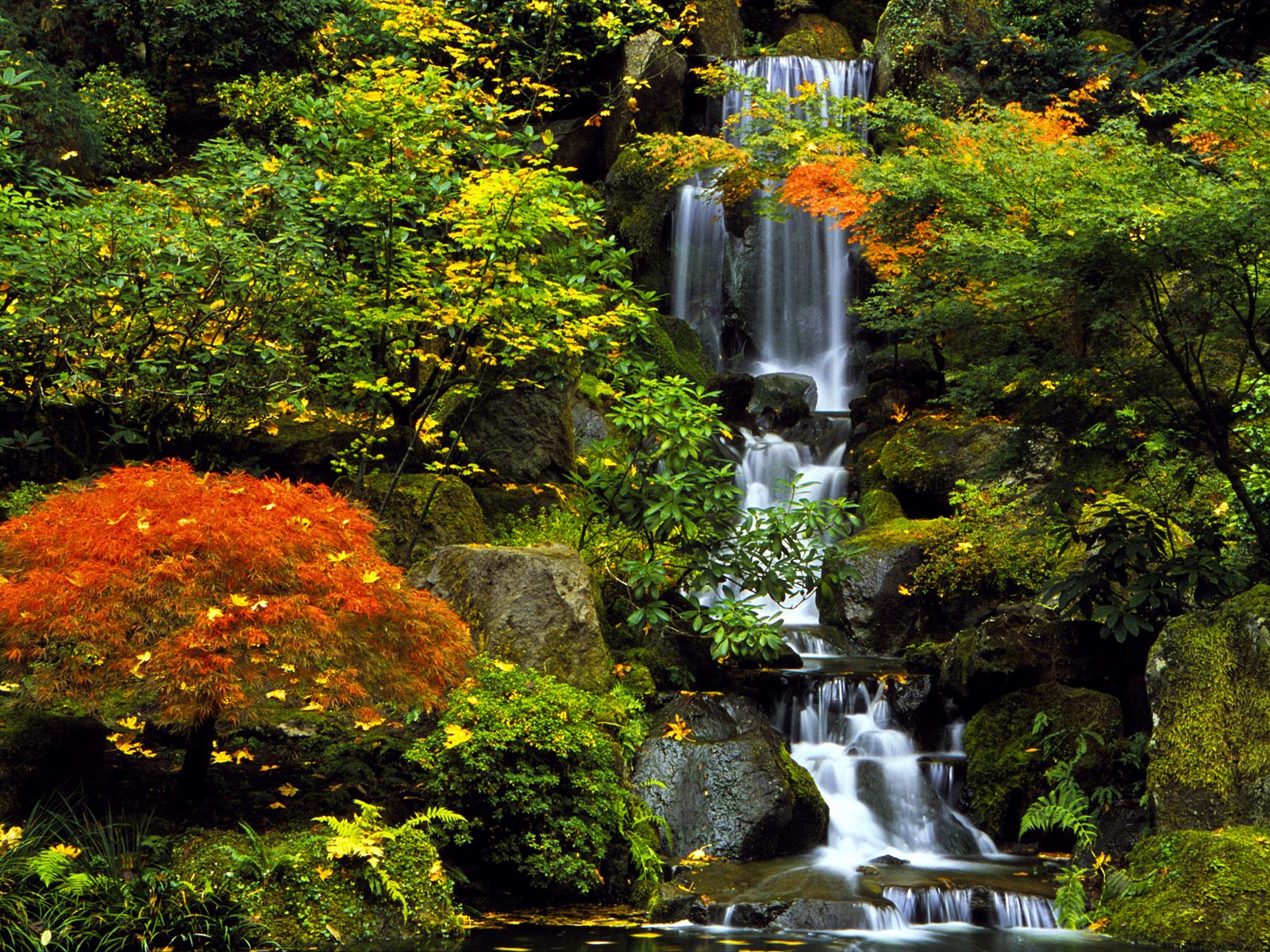 Japan Nature and landscape Japan Nature and landscape Japan Nature and landscape Japan Nature and landscape Japan Nature and landscape Japan Nature and landscape
 Japan is a popular tourist destination as well as a major business hub. If you are planning a trip to Japan it is a good idea to make all of your arrangements prior to leaving. When it comes to places to stay in Japan, there are many choices and something can usually be found even for those on a tight budget. The links below provide practical information about traveling within Japan as well as information about hotels and other forms of accommodation.
 Hotels in Japan
 Today many religions are practiced in Japan, but most Japanese follow a meld of Shintoism and Buddhism. Although religion does not play a major role in the everyday life of the average Japanese, they do have customs and rituals that are observed on special occasions like birthdays, weddings, funerals, and religious holidays.
 The exact origins of Shintoism are still unknown. Archaeological evidence suggests some form of it was being practiced by the Yayoi people (400 B.C. - 250 A.D.). The Yayoi lived in clans called uji. Each uji had a leader who served as both the war-chief and spiritual leader. Each clan was associated with a single god, or kami. Kami represented objects in nature and wondrous aspects of the world. There were kami representing mountains, rivers, storms, and even rocks. When a clan defeated another clan in war they would assimilate the defeated clan's kami into their existing religion. In this way the Yayoi slowly built a complex hierarchy of kami.
After its arrival from China and Korea in 538 A.D., Buddhism spread rapidly throughout Japan. Many people were reluctant to accept Buddhism at that time because of nationalism and xenophobism. After the defeat of the Mononobe clan in 587 A.D., who were opponents of Buddhism, the religion spread unimpeded. Almost two centuries later, under Emperor Shomu's order, the temple of Todai-ji was built at Nara in 752. It is the largest wooden structure in the world housing a fifteen-meter high gilt-bronze statue of the Cosmic Buddha, later to be known as The Great Sun Buddha, or Dainichi Nyorai in Japanese. The Dainichi Nyorai was associated with Amaterasu, the Shinto Sun Goddess. With the identification of the Dainichi Nyorai with a Shinto kami so began the syncretism of Shintoism and Buddhism. Today, The evidence of this syncretism can be seen throughout Japan.
Many Japanese festivals, or matsuri, originated from early Shinto rituals. These festivals often symbolize hope for abundant rice production or spiritual health of the community. The festivals are often done inside a Shinto Shrine, or display some form or image of a Shrine. Many of these festivals can stretch for over several days. These usually include processions that bear an image of the local Kami through crowded streets to the sound of drums and flutes. The festivities vary with different locals, but they all have similar features: energy, noise, food, and exultation. This is an opportunity members of the local community to celebrate a joyful occasion together.
One of the more well-known festivals in Japan is the Bon Festival, also known as O-bon, an event that marks the annual visitation of departed ancestors to the surviving members of their family. This festival is characterized by visits to Buddhist temples and the decoration of alters of the departed. Days before the festival, ancestral graves are cleaned by family members in preparation for the return of the souls of the deceased. Many people also take this opportunity to return to their native towns to be with their families and visit local temples to pray and give offerings.


